
Spectroscopy
Cathode material characterisation using EXAFS & XANES
Lithium-ion batteries are ubiquitous in mobile devices, for example. In order to develop more powerful batteries, cheaper and more environmentally friendly cathode materials with a higher safety standard are required. At HZB, we are examining lithium-sulfur and lithium-silicon systems to elucidate previous obstacles (such as capacity fluctuations) with regard to better marketing opportunities. In addition to imaging and diffraction methods, we use spectroscopic investigations. By means of X-ray absorption spectroscopy (EXAFS, XANES), charge states of the transition metal ions in different cathode materials as well as changes in the local structure can be measured.
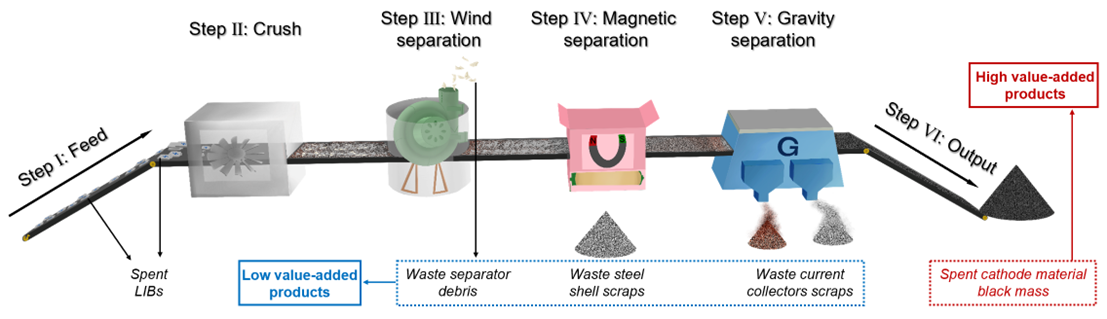
Preparation of spent lithium-ion batteries to recover valuable raw materials. © Haocheng Ji et al., https://doi.org/10.1002/adma.202407029
Thermoelectric materials (RIXS)
In the search for sustainable energy resources and green technologies, thermoelectric materials play an important role. They are characterized by their ability to convert heat directly into electricity or vice versa electrical energy in temperature gradients. By means of RIXS spectroscopy (Resonant Inelastic X-ray Scattering), the influence of the coupling of lattice structure on electronic structure on the thermoelectric performance can be investigated.
RIXS can also be used to study magnetic excitations in a variety of materials, ranging from model materials for basic research to materials with functional energy. It is a complementary technique to the more traditional method of inelastic neutron scattering, and by combining these two methods, a much deeper understanding of the physics of magnetic systems can be achieved.
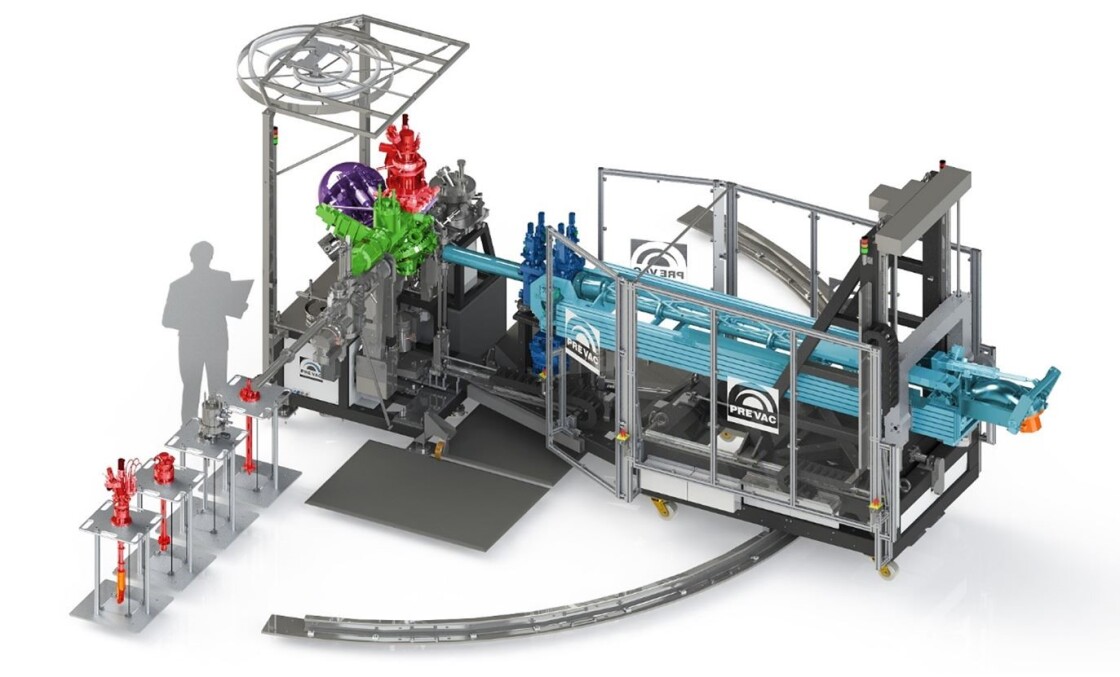
PEAXIS spectrometer with electron energy analyzer (purple), RIXS spectrometer (blue), sample chamber (green), and sample manipulators (red). The RIXS spectrometer comprises a grating chamber (dark blue), a RIXS arm (light blue), and a detector (orange). © HZB
Optimization of material surfaces using XPS
The surface of a material is the interface to other materials (eg in multi-layer systems) or to its environment. The performance of many modern materials can be optimized by better understanding the physical and chemical interactions on the surface.
X-ray photoelectron spectroscopy (XPS) is one of the standard techniques when it comes to the analysis of material surfaces. It finds application in a variety of materials. In combination with high intensities and selectable photon energies of the synchrotron radiation in BESSY II it is possible to make depth-dependent chemical analyzes by XPS.
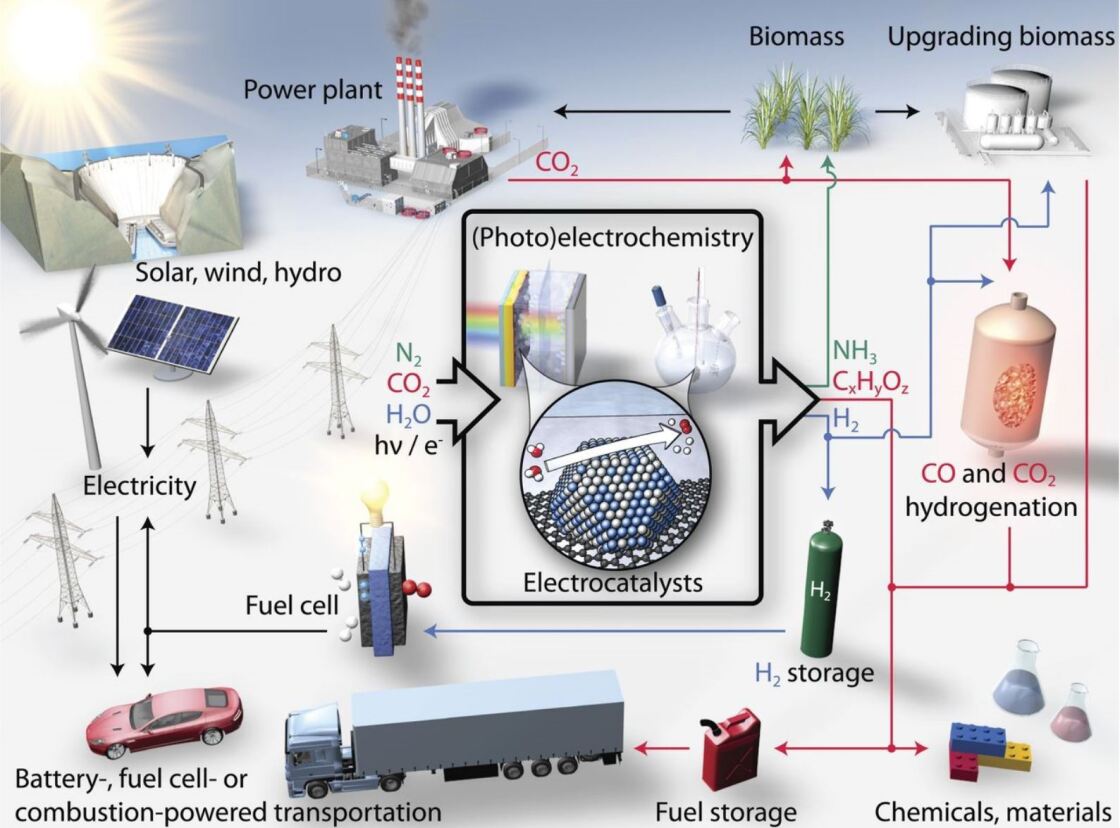
Electrocatalysts characterized with XPS could play a key role in a sustainable energy future. © American Association for the Advancement of Science

